How to choose souvenirs with meaning
Raise your hand if you’ve ever bought a trinket from a trip that you almost immediately forgot about. It’s a common experience!
It’s easy to breeze through the duty-free area on your way home and pick up a few—or a few dozen—chocolate bars. Sometimes that is just the right thing to do. I’ve certainly done it myself, so there’s no judgment here.
But if you love digging around for souvenirs and gifts that have personal meaning and reflect what was most memorable about your trip, here are some ideas to bring with you on your next vacation.
Keep an eye out for things that don’t cost a thing
If the purpose of a souvenir is to spark a pleasant memory, you may find the most meaningful ones during ordinary moments on a trip.
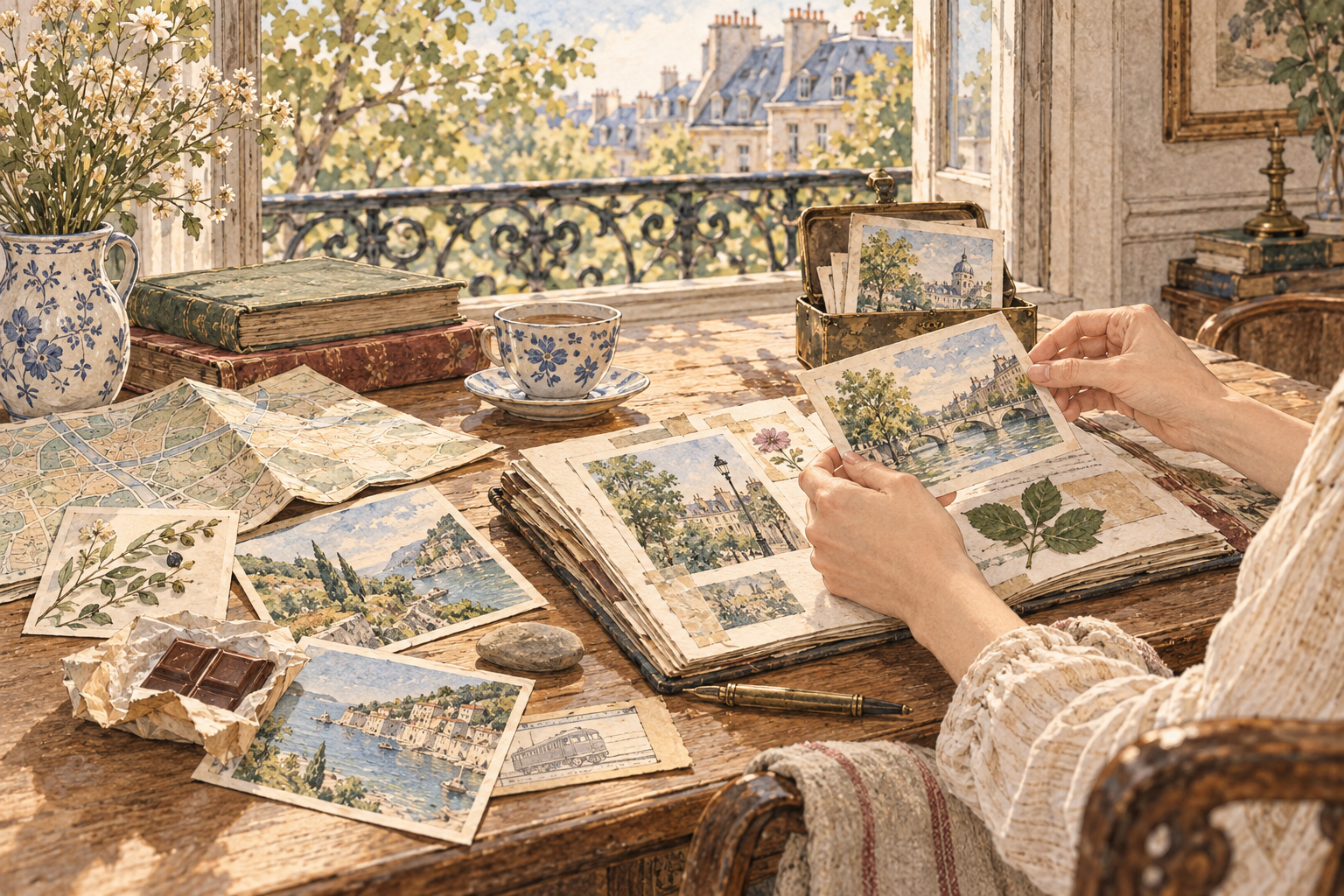
A paper map, museum brochure, ticket stub, restaurant card or other small item can remind you of an adventure, a work of art or a beautiful day in a favorite city. Complimentary items from flights and hotels can also become treasured keepsakes, reminding you of wonderful service or the view from your balcony.
Look to nature
Sometimes the simplest keepsakes carry the strongest memories. Before collecting something from nature, make sure it is permitted and check any rules about transporting natural materials, particularly when traveling internationally.
Tip: A pressed flower or leaf, a beautiful pebble, or a package of locally produced sea salt can make a meaningful keepsake. You could also photograph or sketch something from the landscape rather than removing it.
Boost your learning
If you’re buying something for yourself or someone else, consider choosing an item that offers an inside view of the culture, language, history, music or food of the place you’ve visited.
When I travel, I often buy a copy of Harry Potter and the Sorcerer’s Stone in the language of the country I’m visiting. I tell myself that I’ll use it to learn the language, although deep down I know I may never get as far as I’d like. But seeing the growing collection on my bookshelf brings back warm memories of each trip—and that may be lesson enough.
Don’t be afraid to ask
Have you ever admired the cup, serving dish or other distinctive item used by a restaurant, hotel or café? Ask whether it was made locally or where you might purchase one like it.
You may discover a nearby ceramicist, artisan or independent shop—and bring home something that reminds you of the experience every time you use it. Imagine sipping your morning tea or coffee from the same kind of cup you used in Paris. What could be better?
Something old, something new
One of the best adventures in a new place can be scouring antique shops for quirky treasures. If you have a reader in your life, a gorgeous old book might bring immense joy. Vintage postcards or photographs can be a collector’s dream.
Jewelry, scarves, cuff links and bags can offer a glimpse into local style and history—and they don’t need to be fancy or expensive. Plus, you’ll have a story to tell whenever someone compliments your find.
If something appears especially old or historically significant, ask the seller whether any export restrictions or documentation requirements apply.
If you prefer something new, consider a practical item that you can use in your everyday life. An umbrella, bag, scarf or piece of pottery can bring back happy memories each time you reach for it.
On a trip to Nashville, I bought a ukulele. It sits propped against the wall in my bedroom, where I see it every day and remember my time in Music City. Now, if only I could learn to play it. My parents may have been a little too optimistic when they named me Melody!
Tip: If you love to cook or bake, a locally made cooking tool or regional recipe book might be just the thing.
Some souvenirs last for decades
One of my most unusual souvenirs wasn’t something I could pack in a suitcase. In 1981, I visited my sister and her boyfriend, who were studying in Israel for a year. When her boyfriend and I found one of her lost gold earrings in their dorm on Mount Scopus, he decided the funniest way to return it would be to have his ear pierced and let her discover him wearing it.
Naturally, I got an ear pierced too. She was shocked and delighted—and I came home with a souvenir attached to me.
More than four decades later, that day remains one of my favorite travel memories. Sometimes the story behind a souvenir is more meaningful than the souvenir itself.
Tell your own story
Your phone gives you an easy way to document your travels. When you return, you can turn your photographs into a printed album, scrapbook, calendar or set of postcards for yourself, family members or friends.
Services such as Chatbooks make it possible to create photo books directly from your phone, but you can also make your own journal using photographs and paper keepsakes from the journey.
Whatever your tastes, there are many ways to approach souvenirs so that what you bring home has personal meaning and sparks wonderful memories months and years later.
And don’t forget the chocolate bars on your way out!